

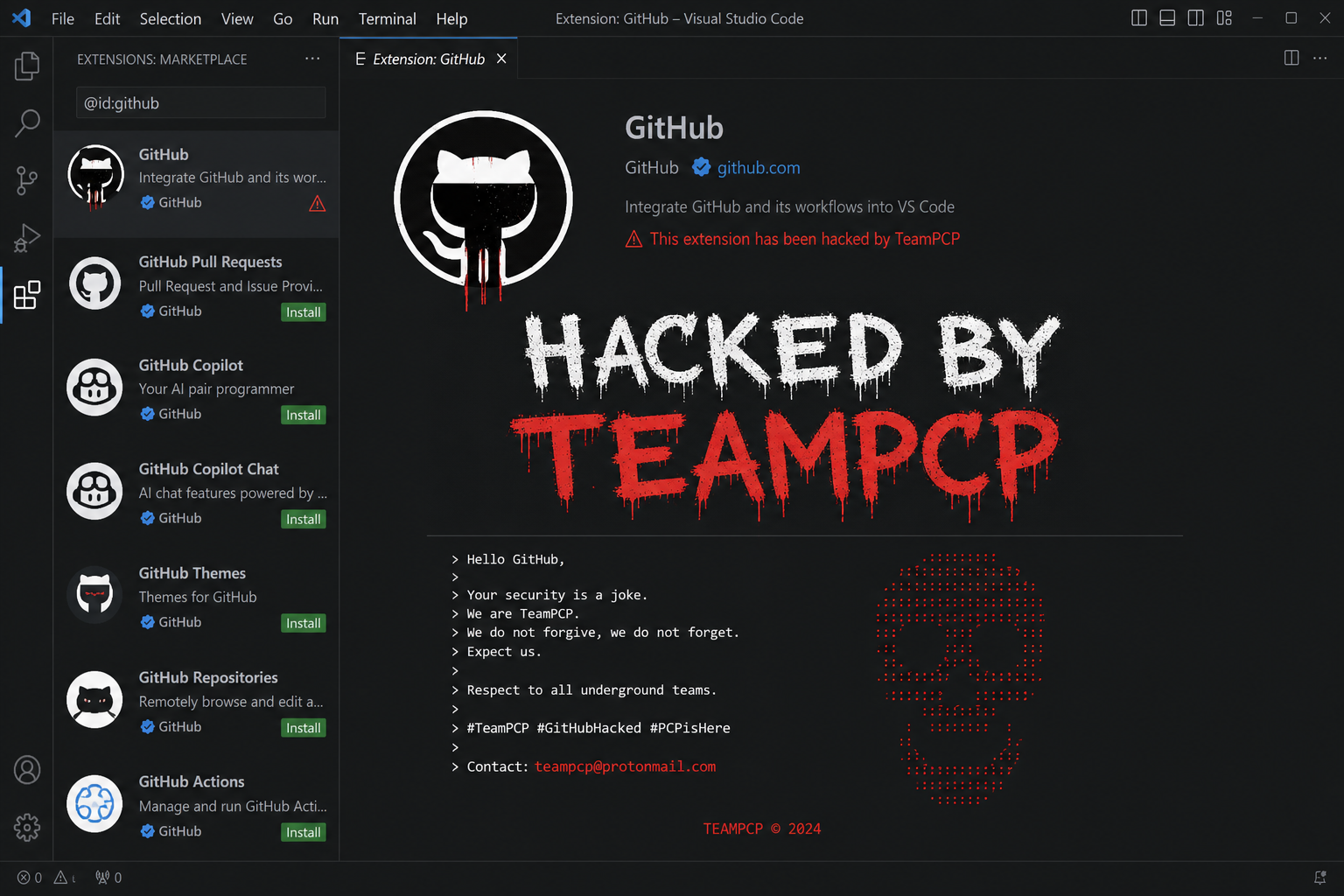
GitHub confirmed that approximately 3,800 of its internal repositories were compromised after one of its employees installed a malicious VSCode extension. The breach, which occurred through a trojanized extension on Microsoft’s official marketplace, highlights the ongoing vulnerability of developer tools and the peculiar trust dynamics in modern software distribution.
The company detected and contained the compromise quickly, removing the malicious extension from the VSCode marketplace and isolating the affected device. GitHub’s assessment indicates that only internal repositories were accessed, with no evidence of customer data being compromised outside the affected repositories.
The Marketplace Problem
VSCode extensions operate as plugins that developers install from Microsoft’s official marketplace to enhance their coding environment. The fact that a malicious extension reached GitHub’s internal systems through this trusted channel exposes a fundamental weakness in how we secure development workflows.
This isn’t an isolated incident. Over recent years, the VSCode marketplace has repeatedly hosted malicious extensions with millions of collective downloads. Last year alone, extensions with 9 million installs were removed for security risks, while others infected users with cryptocurrency miners. In January, two fake AI coding assistants with 1.5 million installs exfiltrated data to servers in China. Because apparently vetting extensions is harder than building rocket ships.
TeamPCP Claims Credit
The TeamPCP hacker group claimed responsibility for the breach on cybercrime forums, boasting access to GitHub source code and roughly 4,000 repositories of private code. They’re asking for at least $50,000 for the stolen data, positioning this as their “retirement” score rather than a traditional ransomware operation.
TeamPCP has previously conducted massive supply chain attacks targeting developer platforms including GitHub, PyPI, NPM, and Docker. Their recent “Mini Shai-Hulud” campaign even impacted OpenAI employees, demonstrating their focus on high-value developer targets.
The Developer Tools Paradox
There’s something deeply ironic about this breach. GitHub, the platform that hosts the world’s largest collection of open source code and serves over 180 million developers, fell victim to the same supply chain vulnerabilities that plague the broader software ecosystem. An employee at the company that preaches software security best practices installed a poisoned extension from an official marketplace. Talk about eating your own dog food, except the food was poisoned.
This incident perfectly illustrates the challenge facing modern software development: even security-conscious organizations can’t fully protect against supply chain attacks when they rely on third-party tools and extensions from supposedly trusted sources.
