

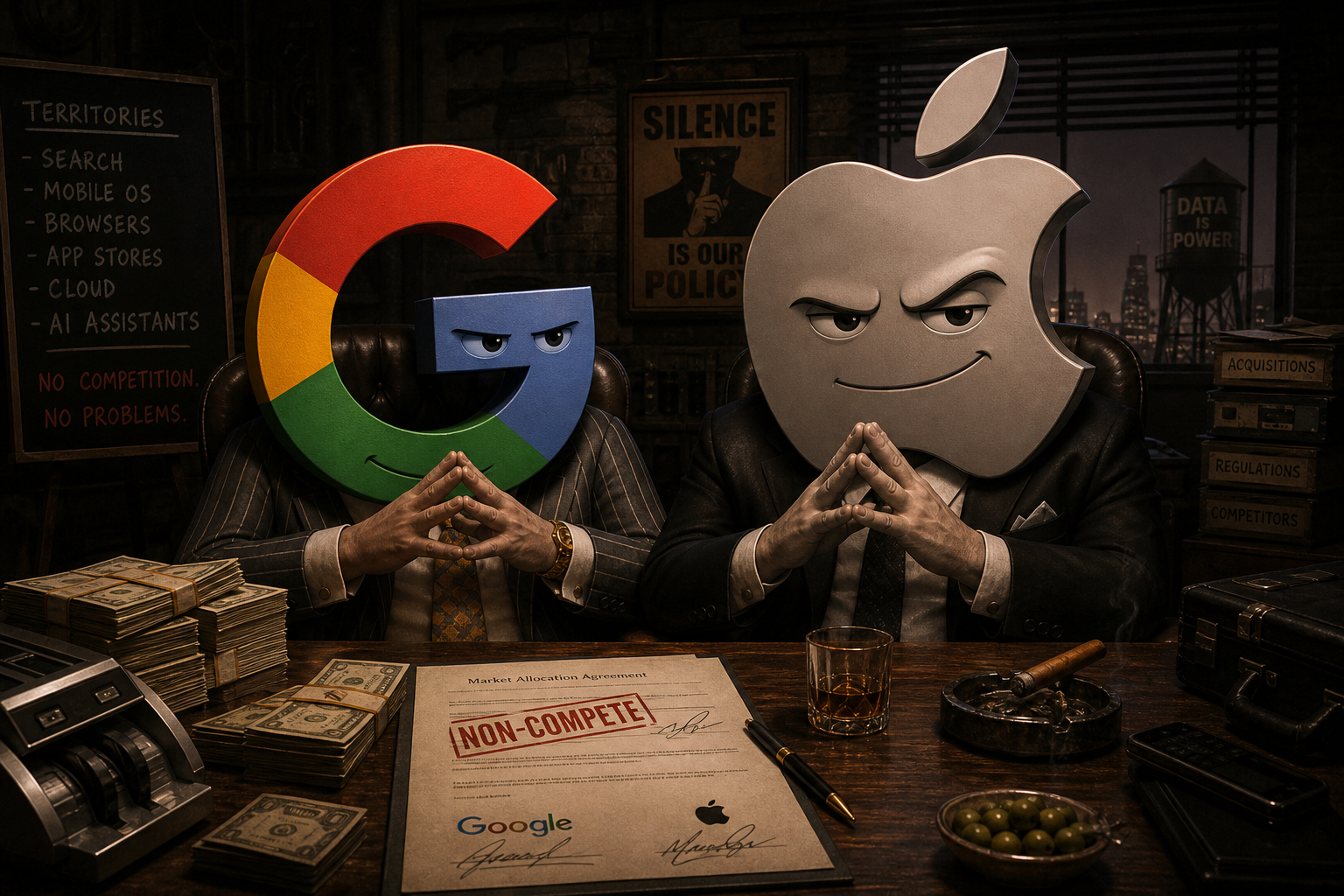
Apple has positioned itself as Google’s most passionate defender in Europe, a surprising move from the company that once marketed itself as the privacy-conscious alternative to Google’s data collection practices. Apple is now warning the European Union about the “profound risks” of forcing Android to open its system-level AI capabilities to third-party services like ChatGPT or Grok. While Apple frames this as concern for user privacy and security, the real motivation appears to be protecting their own AI monopoly.
The European Union’s Digital Markets Act requires Google to stop giving its Gemini AI preferential treatment on Android. Under this regulation, the platform must allow third-party AI services equal access to system functions, screen context, and hardware capabilities. This requirement concerns both Apple and Google because it threatens their carefully controlled ecosystems. Since Apple Intelligence relies heavily on Gemini’s underlying technology, both companies have a shared interest in keeping system-level AI capabilities restricted. This represents corporate cooperation presented as user protection.
This alliance between Apple and Google effectively limits the development of third-party mobile agents, leaving only graphical user interface solutions like ByteDance’s smartphone assistant as viable alternatives. Command-line interface agents like OpenClaw showed potential by using APIs to automate tasks across applications. However, Apple and Google’s refusal to provide system-level access forces AI assistants to use screen-scraping and UI automation instead. This approach essentially makes AI “use apps like humans do” through accessibility services and input injection. It’s an intentionally limited method that maintains platform control while providing enough functionality to avoid claims of completely blocking innovation.
In an industry that frequently advocates for open standards and user choice, the two largest mobile platforms are working together to ensure AI remains under their control. European regulators aimed to prevent AI monopolies, but Apple and Google have developed an effective counter-strategy: presenting monopolistic behavior as privacy protection to discourage regulatory action. If the EU doesn’t maintain its position, mobile AI agents will be forced to adopt ByteDance’s graphical approach, operating as limited tools in ecosystems designed to keep them at a disadvantage.
