

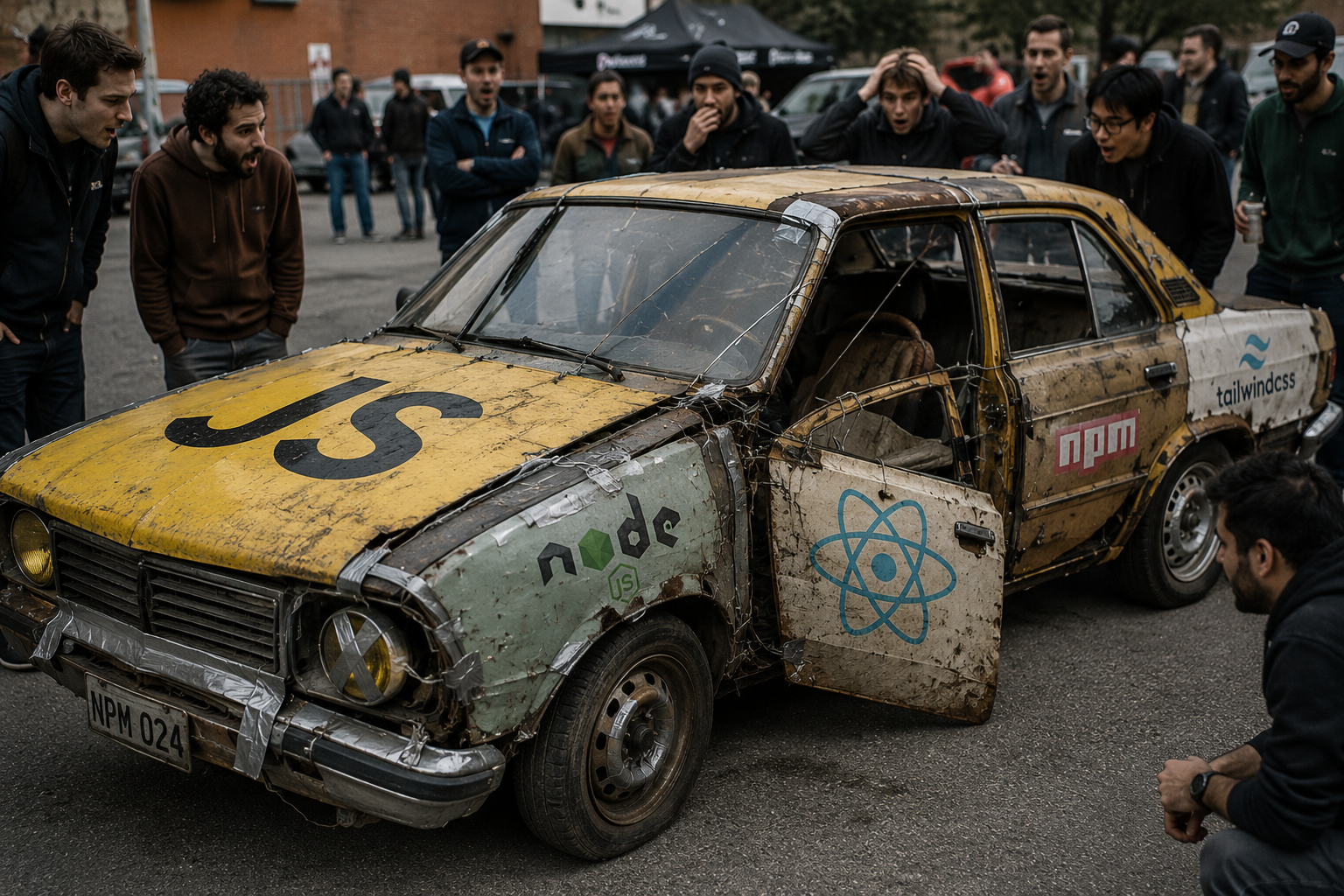
Another Tuesday, another catastrophic npm supply chain attack that has left JavaScript developers worldwide scratching their heads and wondering how such an unforeseeable tragedy could possibly occur. This time, a malicious actor took control of an abandoned string capitalization utility (because apparently writing “toUpperCase()” is too intellectually demanding for modern web development) and successfully injected cryptocurrency mining code into production systems across the globe.
The response from the JavaScript community has been predictably enlightening. “There’s literally nothing we could have done,” explained one senior frontend engineer, standing next to a dependency tree that resembles a Jenga tower built by caffeinated interns. “How were we supposed to know that relying on 847 unvetted packages maintained by anonymous teenagers might pose security risks? This is just the cost of modern development.” Meanwhile, developers in ecosystems like Go and Rust (where radical concepts like “standard libraries” and “cryptographic verification” still exist) reported zero incidents of random college dropouts accidentally destroying global infrastructure.
Perhaps most fascinating is the npm registry’s continued commitment to executing arbitrary installation scripts on developer machines by default, a feature that would make 1990s malware authors weep with envy. “We’re deeply saddened by this completely unpredictable event,” stated an npm spokesperson, apparently unaware that other package managers solved these problems years ago. “Our thoughts and prayers go out to the DevOps teams currently discovering that their entire infrastructure was compromised by a package called ‘left-pad-but-better-v2’ that someone installed to avoid writing three lines of code.” The JavaScript ecosystem remains unified in its belief that supply chain attacks are acts of nature, like earthquakes or the inevitable heat death of the universe, rather than predictable consequences of architectural choices that prioritize convenience over security.
